
Kitchen Island Pendant Lighting Ideas: Size, Spacing & Height
Plan pendant lights that fit the island, illuminate the worktop and stay clear of sightlines. This guide gives you practical starting measurements, a sizing table and real fixture examples—then shows you when to adjust the rules.
Updated July 13, 2026 · ElitaGlow Lighting Team
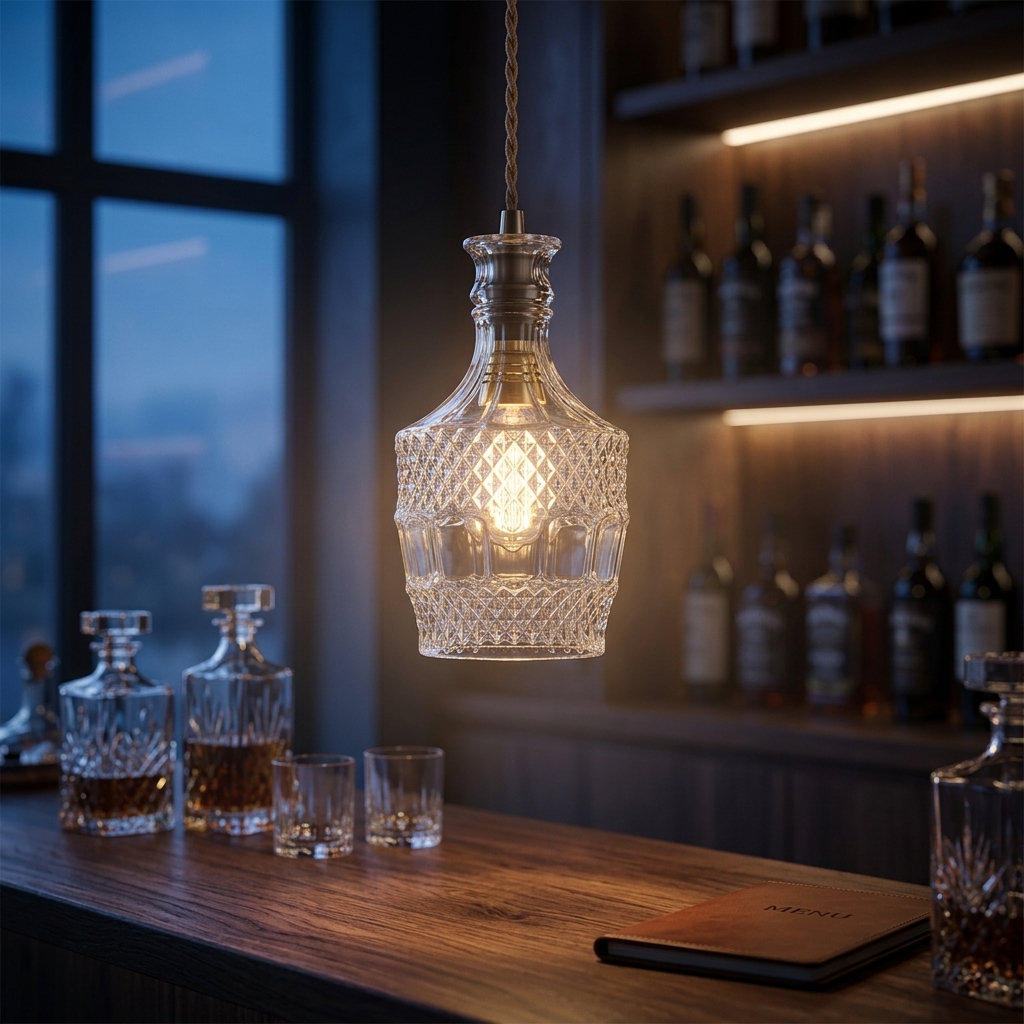
The quick answer
As a starting point, hang the bottom of a kitchen-island pendant 30–36 inches (76–91 cm) above the countertop. A 6–7 ft island commonly suits two medium pendants; an 8–9 ft island often suits two large or three medium pendants. Fixture width, visual weight and clear sightlines matter more than pendant count alone.
Match pendant count to island length and fixture size
Begin with the usable length of the countertop, then consider the width of each shade. A visually substantial 18-inch pendant can replace two narrow pendants; slim 6-inch pendants can work well as a trio. The table is a planning shortcut, not a fixed rule.
| Island length | Useful starting layout | Typical shade width | What to check |
|---|---|---|---|
| Under 5 ft (152 cm) | One statement pendant or two slim pendants | 10–18 in (25–46 cm) | Keep both end zones clear and avoid crowding a compact surface. |
| 6–7 ft (183–213 cm) | Two medium pendants | 10–16 in (25–41 cm) | Balance the pair around the island centreline. |
| 8–9 ft (244–274 cm) | Two large or three medium pendants | 10–20 in (25–51 cm) | Choose count after checking the actual shade diameter. |
| 10 ft+ (305 cm+) | Three substantial or four slim pendants | 8–20 in (20–51 cm) | Use a measured layout so the ends do not feel empty. |
These are design starting points. Oversized fixtures, very wide islands and architectural ceiling features can justify a different layout.
Calculate even pendant spacing before drilling
Mark the island centreline on painter’s tape first. For two pendants, position them symmetrically around the island centre. For three, place the middle pendant on the centreline and mirror the outer two. Check the distance between the actual shade edges—not only the electrical boxes—because wide glass shades need more breathing room.
Record island length and width, excluding an overhanging breakfast ledge if the lights will centre over the worktop.
Use paper circles at the shade diameter and tape or string from the ceiling to judge scale.
Check the layout from the kitchen entrance, adjacent room and seated position.
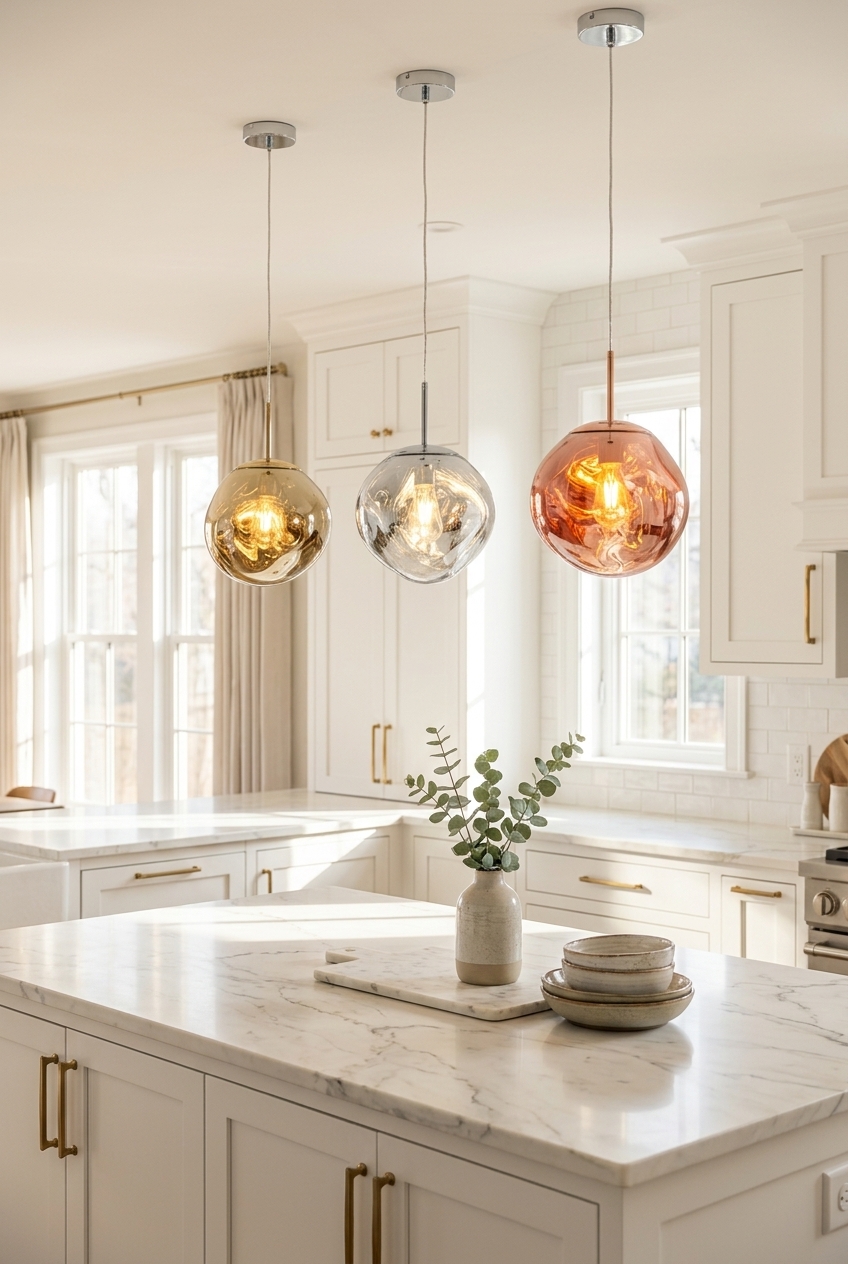
Hang pendants high enough for clear conversation
Measure from the countertop to the lowest edge of the shade. The common 30–36 inch range keeps light close to the work surface without placing the fixture directly in most people’s sightline. Start nearer 36 inches for large or visually dense shades and move lower only if the room, fixture and users remain comfortable.
With a tall ceiling, the cord or downrod becomes longer; the desired countertop clearance usually remains similar. Before final installation, have the tallest regular user stand and sit on both sides of the island. No shade should block faces or create glare at eye level.
Layer pendant light with task and ambient lighting
Pendants should not carry the entire kitchen lighting plan. Recessed ceiling lights provide general illumination, while under-cabinet lights remove shadows from preparation areas. The island pendants then add focused light, rhythm and atmosphere.
For an inviting residential kitchen, 2700–3000K usually produces a warm-to-neutral appearance. A colour rendering index of 90 or higher helps food, timber, stone and metal finishes appear natural. Confirm that the fixture, bulb and wall control are all dimmer-compatible before purchase; one incompatible component can cause flicker or a restricted dimming range.
Choose a shade that controls glare and visual weight
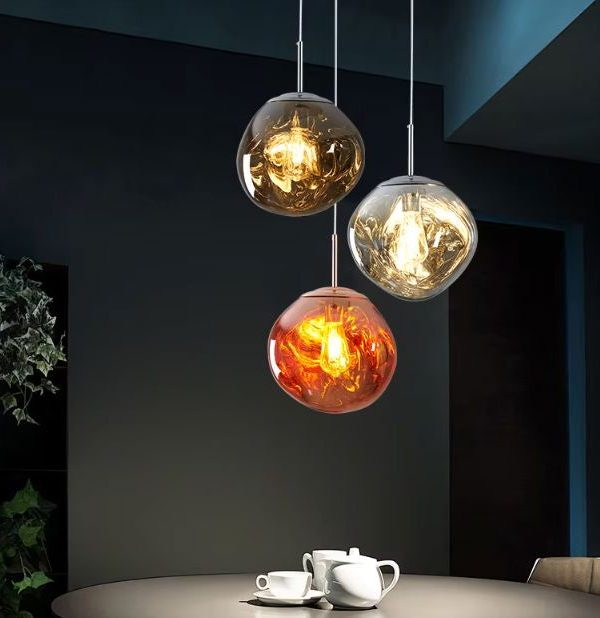
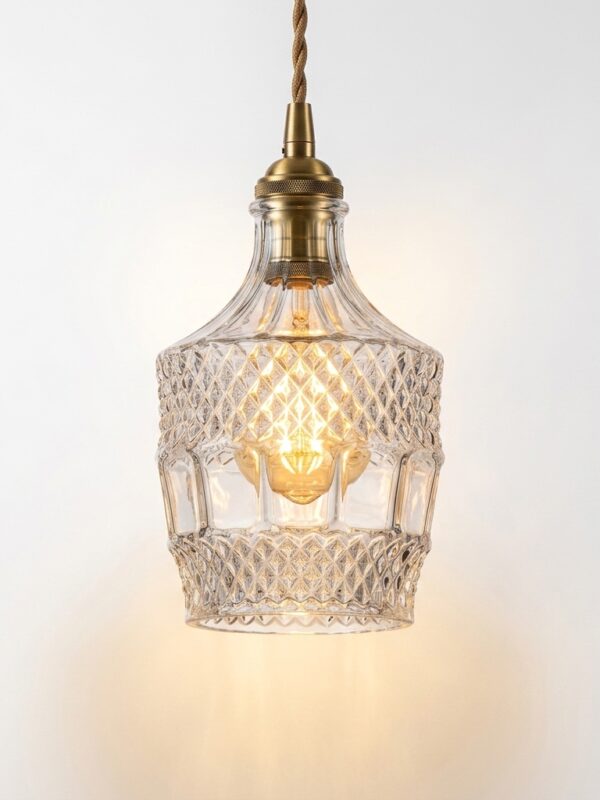
Clear glass preserves views through an open-plan kitchen and lets light travel broadly, but the bulb remains visible. Frosted or opal glass softens glare. Smoked and amber glass add mood but may reduce useful task light, so they work best with adequate recessed or under-cabinet lighting. Solid metal shades direct light downward and create a stronger visual silhouette.
Repeat a metal finish at least once elsewhere in the room—such as the faucet, handles or stools—without matching every finish. Two coordinated finishes normally feel deliberate; too many unrelated finishes can make a small kitchen look busy.
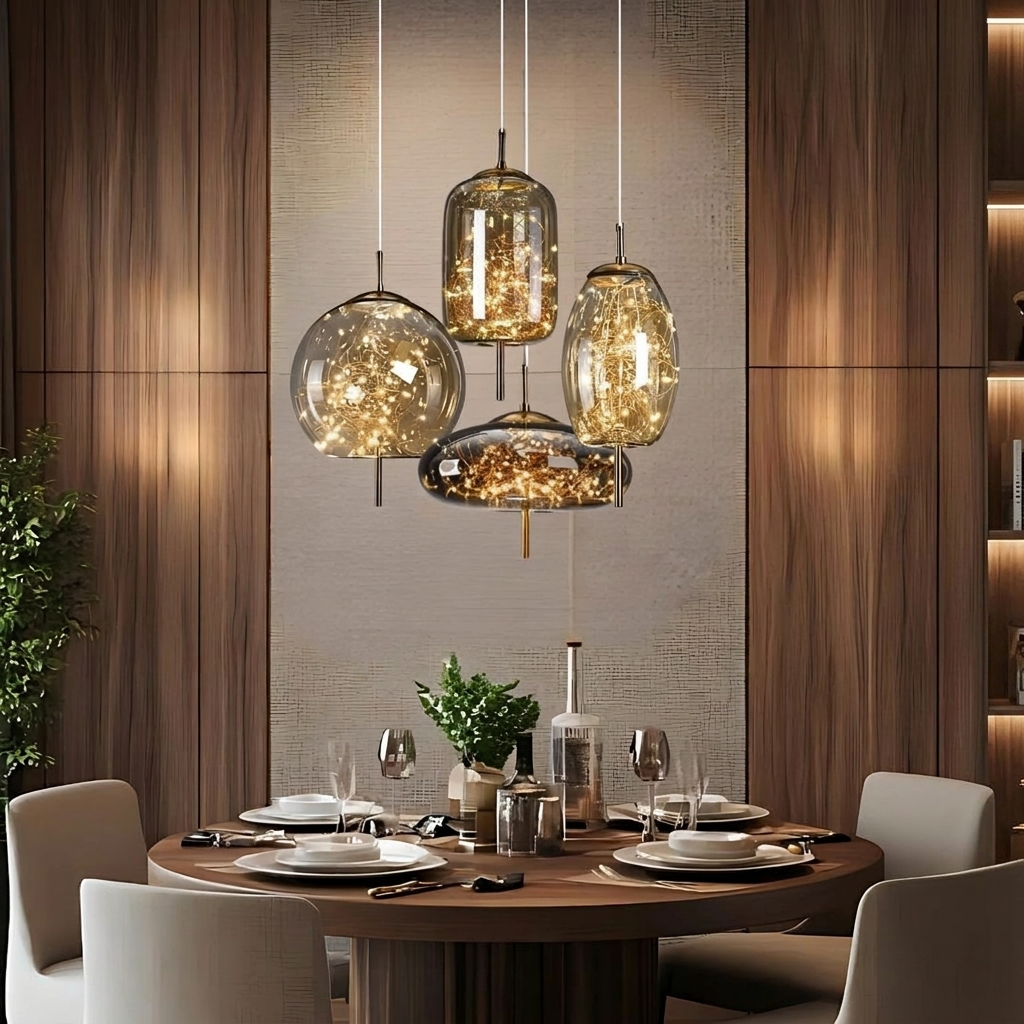
Measure these details before choosing a fixture
- Island length and width
- Finished ceiling height above the countertop
- Shade diameter and shade height
- Canopy diameter and mounting position
- Maximum and minimum suspension length
- Bulb base, output and colour temperature
- Dimmer and LED compatibility
- Door, cabinet and seated sightline clearance
Electrical mounting and wiring must follow local requirements. Use a qualified electrician where required, especially when moving boxes or supporting heavy fixtures.
Avoid the mistakes that make island lighting feel wrong
Choosing count before shade diameter
Three large pendants can overwhelm an island that would look balanced with two. Select the fixture first, then finalize the count and spacing.
Centred on the room instead of the island
In many kitchens the island is not centred in the room. Align the lighting with the work surface unless a deliberate architectural plan says otherwise.
Using decorative pendants as the only task light
Tinted glass and low-output decorative bulbs create mood, not necessarily safe preparation light. Support them with other layers.
Ignoring the view from a stool
A layout can look perfect while standing and block conversation when seated. Test both views before shortening cords permanently.
Compare genuine ElitaGlow product options
These cards load the current WooCommerce photograph, price and availability automatically. Use the product pages to confirm finish, dimensions and suspension length for your chosen variation.
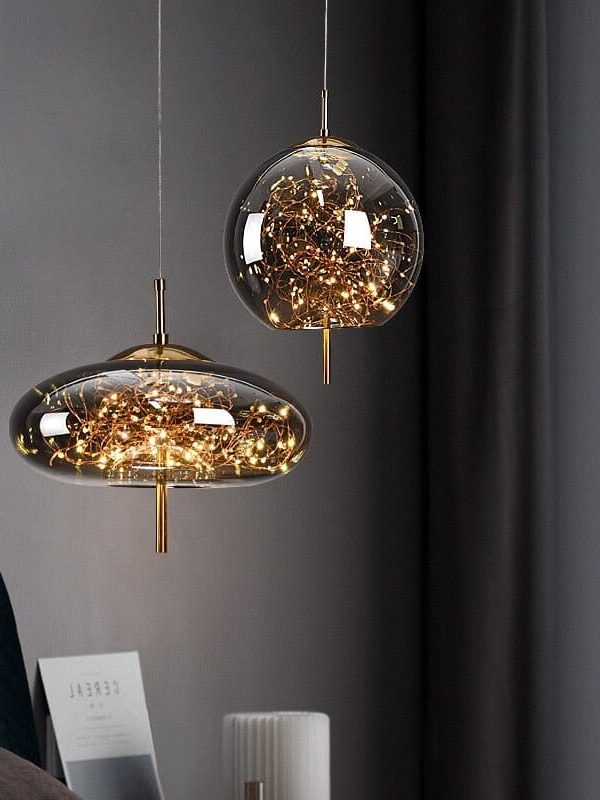
Kitchen island pendant lighting questions
How many pendants should go over a 6-foot island?
Two medium pendants are a reliable starting point. One wide statement pendant or three very slim pendants can also work; verify the shade diameter and end clearances before deciding.
Should pendant lights be centred over the island?
Yes, centre the group over the island’s usable work surface. With an asymmetrical island, centre over the main preparation and seating zone rather than automatically following the room centre.
How far apart should kitchen island pendants be?
There is no universal spacing because shade width changes the result. Start by positioning the outer pendant centres 12–18 inches from each end, distribute the remaining centres evenly, and confirm that the shade edges do not feel crowded.
Can pendant lights work with an 8-foot ceiling?
Yes. Choose a compact shade and short adjustable suspension that can maintain roughly 30–36 inches above the counter without crowding the ceiling. A semi-flush or linear fixture may work better where the pendant body is tall.
Should island pendants match cabinet hardware?
They do not need to match exactly. Repeating the pendant finish in one or two other details is usually enough to make mixed metals feel intentional.
Turn the measurements into a shortlist
Write down your island size, target hanging height and preferred shade diameter before browsing. That small preparation makes it easier to compare fixtures by fit instead of choosing only by appearance.